Booking SaaS Platform
BookUp
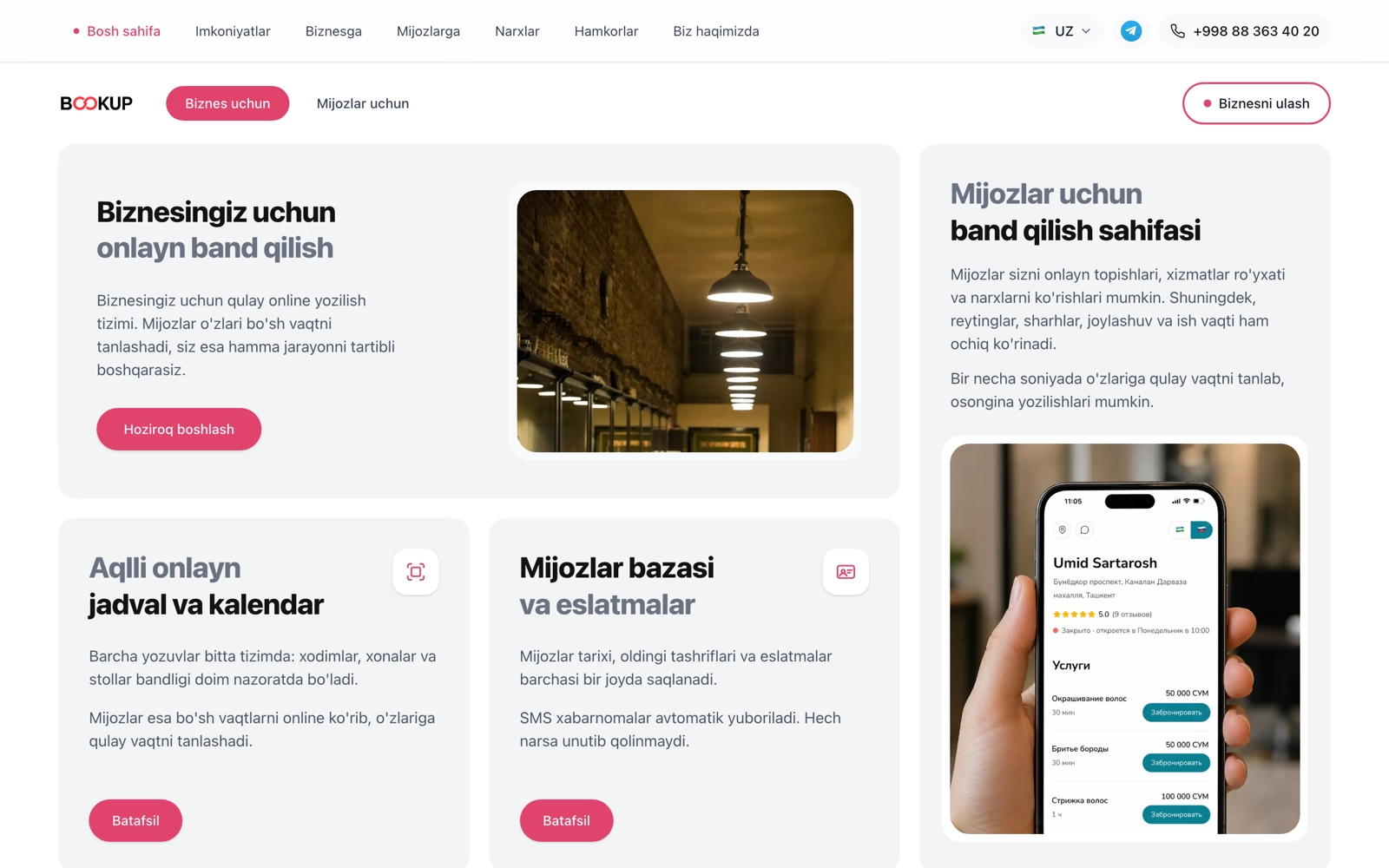
Multi-tenant booking & client-management SaaS for service businesses — a Telegram mini-app for owners, a Next.js booking site for customers, and a NestJS/PostgreSQL backend. Integrated Payme payments and Instagram auto-reply automation.
Overview
BookUp started from a simple frustration: small service businesses — barbershops, salons, billiards clubs — were juggling bookings across Telegram chats and paper notebooks. I built an all-in-one platform so an owner can run the whole business from their phone while customers book online in a few taps. It now powers 20+ businesses.
What I built
Took it from an empty repo to 20+ paying businesses — owner app, customer booking site, and the backend behind them.
Designed wallet-based billing so platform fees are deducted automatically from a prepaid balance — no chasing invoices.
Built the Instagram automation that turns comments and DMs into bookings — connecting the owner's account with a single OAuth flow.
Defined the pricing model and SaaS billing — tiered plans, per-staff pricing, SMS packs, and an add-ons calculator.
Architecture
Every business gets its own isolated space on a shared platform — multi-tenant — reached via its own subdomain. Owners manage everything from a Telegram mini-app, customers book through a fast Next.js site, and a NestJS/PostgreSQL backend ties it all together. Cloudflare sits in front for edge security.
Under the hood
Multi-tenancy at the edge: every request hits Next.js first, which reads the subdomain, validates it, and internally routes to the right tenant — so no tenant can ever stumble into another's data, and onboarding a new business is instant.
Prepaid-wallet billing modeled as a ledger of typed transactions — fee deductions, SMS charges, and refunds all happen automatically and stay auditable, so owners always know exactly where their money went.
Token-refresh handling that survives flaky connections and double-taps without logging users out — concurrent 401s coalesce into a single refresh round-trip, preventing the reuse-token race that plagues mini-apps.
Dual pricing modes — flat-rate or per-hour with peak-window rules — plus resource types for both staff and assets like tables and courts, so one schema models barbershops and billiard clubs without hacks.
What I learned
Running my own SaaS taught me the hard part isn't the code — it's billing edge cases and keeping real customers happy when things break.
Getting tenant isolation right early made every later feature simpler — one architectural decision that saved weeks of rework.
Telegram Mini Apps have quirks that don't show up in docs — auth edge cases, keyboard pop-ups breaking layouts — you only learn them by shipping.
Built with
Frontend (Public Site)
- Next.js 16
- React 19
- TypeScript 5
- Tailwind CSS 4
- shadcn/ui
- Framer Motion
- GSAP
Frontend (Telegram Mini App)
- Vite
- React 18
- Zustand 5
- TanStack Query 5
- @tma.js/sdk-react
- i18next
Backend
- NestJS
- PostgreSQL
- REST API
Infra & Tools
- Docker
- Cloudflare
- Google Maps API
- Payme
- Vitest